
Global agricultural production shapes international markets and national security. Understanding the key players behind this supply is crucial. A handful of nations dominate exports of essential commodities.
China stands as the globe’s largest consumer and a top producer. Its output includes vast quantities of pork, vegetables, and seafood. This balances massive domestic needs with its role in trade.
The United States remains a cornerstone for the international food supply. It exports enormous volumes of corn and soybeans. These crops form the backbone of many supply chains.
Brazil has risen as a dominant export force. It ships huge amounts of soy, sugar, coffee, and orange juice. Rising global demand is met by its agricultural output.
Russia secured its position as the top wheat exporter since 2017. Its shipments significantly influence grain prices worldwide. This makes it a critical player in the market.
India wields growing influence as the largest rice exporter. It carefully manages domestic stocks to ensure national stability. Its exports are vital for many countries.
Analyzing these leaders reveals how production, trade, and strategy intersect. Food often equals power in today’s geopolitical landscape. This article explores the primary sources of our sustenance.
Global Overview of the Modern Food Supply System
The United Nations tracks key metrics to gauge the health and stability of worldwide sustenance systems. Its Food and Agriculture Organization (FAO) provides comprehensive data dating back to 1961. This information helps experts understand long-term trends in availability.
Understanding Food Production and Supply Networks
Modern food production networks are deeply interconnected. A disruption in one region can quickly impact the availability of products globally. This complexity makes monitoring these systems vital for stability.
Policymakers must consider the quality of protein sources in their planning. Animal-based proteins are often considered complete compared to many plant-based alternatives. Ensuring a diverse and nutritious supply is a growing focus.
Key Metrics: Caloric, Protein, and Fat Supply Trends
Global per capita protein supply has increased by approximately one-third since 1961. Significant growth occurred in Africa, Asia, and South America. This marks a major shift in dietary patterns.
Caloric intake is another crucial measure. The average sustenance supply in France has more than doubled over the last 300 years in these terms. Understanding food security requires analyzing such caloric data.
Fat supply has been rising across all regions since the mid-20th century. The rate of increase has slowed in North America and Europe. Regional variations in fat consumption remain significant between nations.
Maintaining security involves monitoring equitable distribution within a population. The minimum dietary energy requirement (MDER) defines the prevalence of undernourishment. A stable supply network aims to keep everyone above this threshold.
Who Supplies The World With Food Most – A Detailed Look at Global Leaders
When examining the world’s food exports, a clear pattern emerges. A handful of countries hold commanding positions in specific markets. This dominance directly influences global prices and overall supply security.
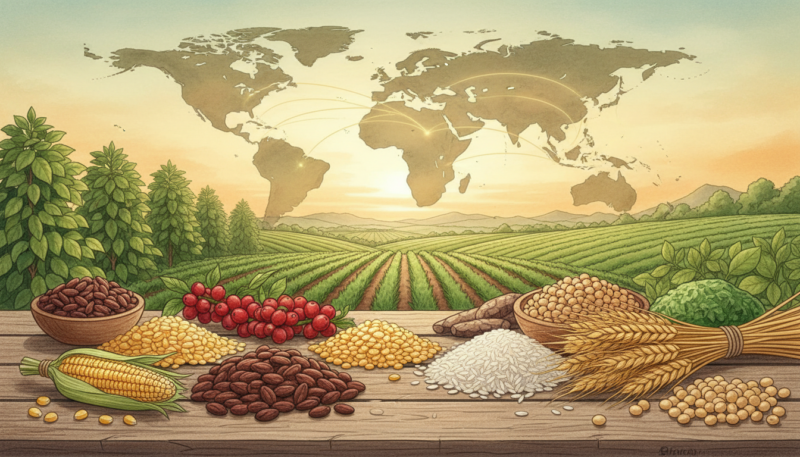
Major Exporters and Their Dominant Commodities
Brazil has revolutionized its agricultural sector. It shipped over 60% of global soybean exports last year. The country also supplies over a quarter of the world’s coffee.
Russia maintains its position as the top wheat exporter. It supplied around a fifth of global wheat exports last year. Grain has become a key strategic tool for the nation.
India dominates the international rice market. It accounts for roughly 40% of global rice exports. This volume is three times greater than its closest competitor.
The United States remains a powerhouse in corn exports. Last year, its export volume surpassed the combined total of Brazil and Argentina. This secures its critical role in feed and biofuel supply chains.
Indonesia and Malaysia lead the global palm oil trade. Indonesia alone exported $17.4 billion worth of the product in 2020. These nations show how specific goods define a country’s export profile.
Together, these exporters demonstrate how commodity control shapes the global food economy. Their production decisions ripple through international markets.
Regional Influences on Global Food Trade Patterns
Food trade flows are not uniform, with each major region developing unique export and import profiles. These patterns shape market access and supply security for billions of people.
Comparing North America, Europe, and Asia-Pacific Trends
In Europe, the Netherlands stands out for its efficient trade network. It ranked fourth in total food trade value in 2020, with $100 billion in exports. This creates a strong positive balance for the country.
Conversely, the United Kingdom faced a significant trade deficit of $62 billion that same year. A 14% drop in exports after Brexit worsened this situation. It highlights how policy changes can disrupt regional food supply.
Within the Asia-Pacific region, Australia fills a critical niche. It is the world’s second-largest exporter of rapeseed oil and the fourth-largest wheat exporter. Countries like Indonesia rely on these shipments for staple goods they cannot grow.
Japan remains a major importer of food products, ranking sixth globally by import value. Despite its large economy, it does not rank in the top ten for total trade value. This shows a heavy reliance on external markets for sustenance.
These regional dynamics demonstrate how geography and policy define trade. Nations balance domestic production with the need for international imports to feed their populations.
Geopolitical Forces and Their Impact on Food Supply
Recent geopolitical events have triggered a significant shift in how nations view the global market. Many are now rebuilding reserves and altering export rules to secure their populations. This move toward protectionism reshapes international food flows.

Trade Wars, Tariffs, and Protectionism
Trade disputes directly impact agricultural sectors. The U.S. government provided billions in aid to farmers to counter market disruptions from trade actions. This shows how political conflicts translate into economic support.
Other nations adjust domestic policies to shield their economies. Brazil increased its ethanol mandate to support local sugar prices. Argentina lowered export taxes to make its goods more competitive abroad.
National Policies Shift Toward Self-Sufficiency
Countries are actively reducing reliance on imports by building national reserves. Sweden allocated $63 million to stockpile emergency food for its citizens. Finland, Norway, and Indonesia are undertaking similar projects.
This trend highlights a prioritization of national food security over open trade. Some nations now view sustenance as a strategic tool. In 2022, former Russian president Dmitry Medvedev stated Russia would supply food only to “friendly” countries, a stance reflective of broader global food security strategies. These actions signal a new era where geopolitical alliances can dictate access to essential products.
Economic Factors Influencing Global Food Production
Economic strength is a primary driver behind a nation’s capacity to produce and trade agricultural goods. Financial power shapes a country’s role in the world food market.
Impact of GDP and Market Dynamics
The United States leads in food exports, with $294.3 billion in commodities traded during 2020. China’s massive domestic demand resulted in $260 billion in food product trade, with imports reaching $194 billion. Germany, Europe’s top economy, ranked third with $175 billion in food trade value that same year.
Data shows a strong correlation between a nation’s GDP per capita and its food supply quality. Richer countries tend to have greater availability of calories, protein, and fat. This link highlights how prosperity directly impacts nutritional security.
Market prices for these goods have generally declined since March 2022. Analysts, however, expect them to remain above pre-pandemic levels. Producers are adjusting profit margins, keeping costs elevated for consumers.
Understanding these economic factors is essential for businesses and governments. Navigating global production and trade requires insight into market dynamics and financial indicators.
The Role of the United States in Shaping Global Food Supply
Shifts in U.S. farming priorities reflect broader changes in the global food economy. The nation’s influence on the international supply of goods is profound, even as its export shares in specific commodities have evolved.
Historical Influence and Current Trends
The United States has long been a cornerstone of the global food supply. Its historical dominance in wheat exports has notably receded. The country lost its title as the world’s biggest wheat exporter in 2013.
It now ranks fourth behind Russia, Canada, and Australia. U.S. wheat exports fell from 50% of the global market in 1973 to a near record-low of 11% last year.
A similar trend is visible in the soybean market. The U.S. share of global soybean exports dropped to 23% last year. This is down from 41 million tonnes shipped in 2010, as competitors like Brazil expanded.
In recent years, U.S. farmers have intentionally shifted production. They focus on more profitable crops like corn and soybeans to maximize returns. This strategic move affects what products are available for export.
Despite these shifts, the United States remains a critical player. It leverages its status as the world’s largest economy to influence international market prices. Its capacity to trade food products globally is immense, ensuring it continues to shape the supply chain.
Emerging Trends in Food Production and Exports
Technological advances and climate adaptation strategies are reshaping the profiles of top food-exporting nations. The future of the global food supply depends on how these leaders manage environmental risks and resource sustainability.
Technological Innovations and Climate Change Adaptation
Climate change poses a severe threat to production. Brazil has seen a five-fold rise in climate-related disasters since the 1990s. This directly threatens key goods like coffee.
Extended droughts there between 2023 and 2025 caused sharp price increases for coffee beans. It highlights the vulnerability of climate-sensitive food products in international markets.
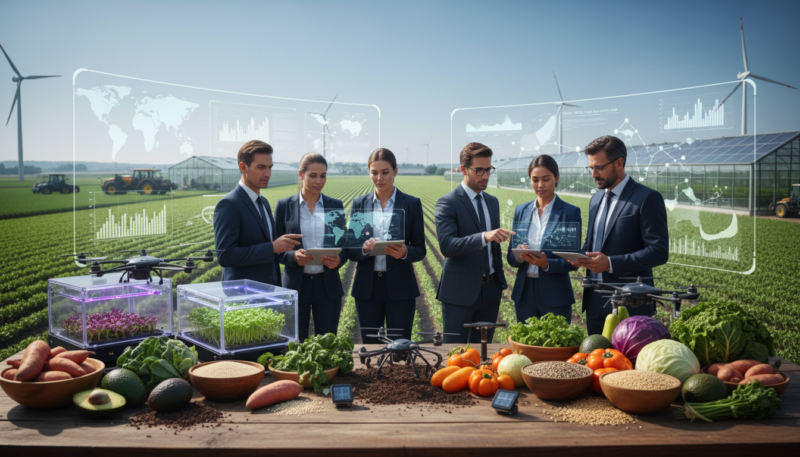
Other nations show resilience. Russia maintained agricultural exports above 40 million tonnes in 2025. This happened despite climate volatility damaging thousands of crop hectares.
Australia’s future export growth faces constraints. The Australian Academy of Technological Sciences & Engineering warns of limits from population growth and resource depletion.
Adaptation is now a priority for major exporters. They must maintain production volume and quality. Innovation in areas like water management is vital for supply security.
These efforts include securing critical inputs, as disruptions in the global fertilizer trade can further threaten crop yields. The ability to adapt will define which countries remain the world’s biggest suppliers.
Comparing Food Commodities: From Soy to Wheat and Beyond
Bananas lead in sheer import quantity, while wine commands a surprisingly high monetary value in global trade. This contrast shows how different metrics define a product’s importance. Consumer demand and production limits shape these markets.
In 2020, banana imports hit 25.2 million units globally. Wine imports reached a value of $38.4 billion. This far exceeded beer’s total monetary value.
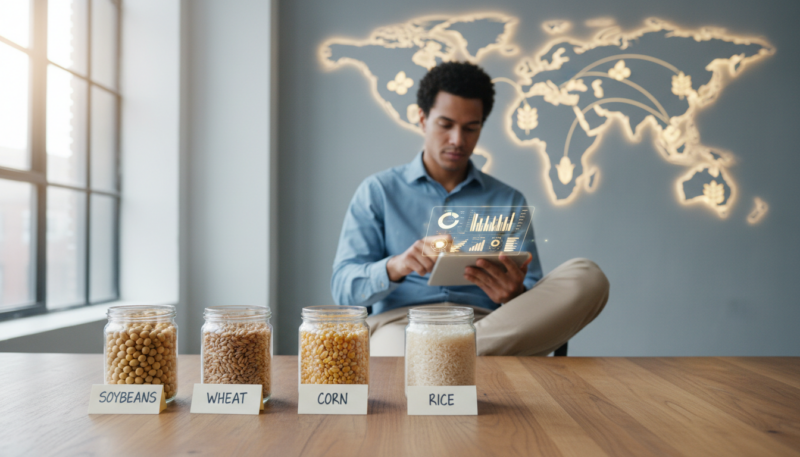
Soya beans are essential for the global food supply. They represent 27% of worldwide vegetable oil production. They also serve as a primary vegan protein source, influencing the European market for genetically modified foods.
Olive oil faced shortages in 2020. This led to lower import volumes. Italy and the United States were the largest importers that year.
Cheese remains a major traded good. Germany, Italy, and the UK imported $34 billion worth in 2020. This highlights the value of processed dairy products.
| Commodity | Key 2020 Trade Metric | Primary Role / Note |
|---|---|---|
| Bananas | 25.2 million units imported | Most imported food by volume |
| Wine | $38.4 billion import value | High-value beverage commodity |
| Soya Beans | 27% of global vegetable oil | Key source of oil and vegan protein |
| Olive Oil | Lower import volume | Shortages affected supply; Italy & US top importers |
| Cheese | $34 billion import value | Major processed dairy product; Germany, Italy, UK lead |
This comparison reveals the diverse nature of food exports and imports. Volume and value tell different stories about market needs. Production challenges and consumer tastes drive this complex trade.
Socio-Economic Implications for Food Exporters and Importers
A nation’s trade in agricultural goods has profound consequences for its financial stability and the well-being of its citizens. This commerce directly shapes key economic indicators like GDP, exchange rates, and inflation.
Global Trade Balances and Market Volatility
A food trade surplus strengthens an economy. The Netherlands saw exports hit $100 billion in 2020, boosting its financial position.
Conversely, a deficit creates strain. The UK faced a $62 billion shortfall after Brexit, showing how politics disrupts trade.
There is a clear health link. FAO data shows lower calorie availability correlates with higher undernourishment rates in a population.
Market volatility is a persistent threat, often fueled by government actions rather than pure supply and demand.
Precautionary stock building and sudden export bans can trigger price surges. This was seen dramatically in 2008.
| Participant | Primary Economic Impact | Key Socio-Economic Risk |
|---|---|---|
| Major Exporters | Trade surplus; GDP growth; currency strength | Over-reliance on volatile global markets |
| Major Importers | Trade deficit; currency pressure; inflation risk | Vulnerability to supply shocks and price spikes |
| Low-Income Nations | Limited trade power; high import costs | Food insecurity and health crises from market shifts |
Countries must constantly balance domestic food security with the demands and risks of the global market.
Conclusion
A handful of nations hold the keys to the international pantry, influencing prices and availability for all. Leaders like the United States, Brazil, and Russia dominate global food exports of specific products.
Climate change and geopolitical tensions now push many countries toward self-sufficiency. This shift prioritizes national food security over open trade, reshaping the entire economy.
Future stability requires innovation to boost production amid resource limits. Cooperation is vital for adapting to a changing environment. Businesses and leaders must stay vigilant to keep supply chains secure.
FAQ
Which nation is the largest exporter of agricultural goods?
The United States consistently ranks as the top exporter by value, shipping a wide range of commodities like corn, soybeans, and meat. Brazil and the Netherlands are also major players in the global food trade.
What are the most traded food commodities internationally?
Key traded items include cereals like wheat and corn, oilseeds such as soybeans, and protein sources like poultry and beef. Palm oil and dairy products also represent significant volume in global markets.
How do geopolitical events affect international food availability?
Trade disputes, tariffs, and regional conflicts can disrupt supply chains and shift trade patterns. These forces often lead to market volatility, impacting prices and access for importing countries.
Why is domestic food production critical for a country’s security?
Strong local production reduces reliance on imports, buffering a nation from international market shocks and ensuring stable access to nourishment for its population.
Which region has shown significant growth in agricultural exports recently?
South America, led by Brazil and Argentina, has dramatically increased its export volume in recent years, especially for soybeans, corn, and beef, changing global trade dynamics.
How does climate change influence worldwide agricultural output?
Changing weather patterns and extreme events threaten crop yields in key producing areas. This pushes the industry toward innovation and adaptation strategies to maintain production levels.
What role does economic development play in food trade patterns?
A country’s wealth influences its consumption habits and ability to invest in farming technology. Richer nations often import high-value goods, while developing economies focus on exporting bulk commodities.