
Navigating corporate sustainability can feel like planning a complex international trip. It requires a clear strategy, reliable data, and the right tools to reach your destination on time.
Just as Frankfurt serves as a major hub for arrivals, modern businesses need a central command center. This is where specialized software becomes an essential guide.
The right platform helps organizations track their environmental impact with precision. It turns raw data into a clear itinerary for reducing emissions.
Companies gain actionable insights to lower operational costs and enhance their brand reputation. This journey is critical for long-term ecological and business goals.
This analysis will explore the implementation process from start to finish. Understanding your carbon footprint is the first step toward a sustainable future.
Introduction to Carbon Management and Sustainability
The journey toward corporate sustainability begins with understanding and managing carbon emissions. This is a critical first step for modern enterprises. Sustainability involves balancing economic growth with environmental responsibility.
It is no longer an optional initiative but a fundamental business requirement. Companies must assess their environmental impact thoroughly. This process is similar to a traveler planning a detailed trip itinerary to reach a desired destination.
Effective carbon management requires setting clear, measurable goals. These goals must align with international standards and local regulations. The transition to a low-carbon economy demands a systematic approach.
| Aspect | Traditional Approach | Modern, Software-Driven Approach |
|---|---|---|
| Goal Setting | Vague, long-term aspirations | Clear, measurable targets aligned with standards |
| Data Collection | Manual, infrequent, error-prone | Automated, real-time, and accurate |
| Progress Monitoring | Retrospective, based on estimates | Ongoing, with real-time performance metrics |
| Reporting | Limited transparency, internal use | Comprehensive, transparent reports for stakeholders |
| Outcome | Reactive adjustments, missed goals | Proactive strategy optimization, proven results |
Adopting these practices improves operational efficiency and reduces waste. It allows organizations to contribute positively to global climate efforts. Industry leaders now prioritize transparency in their environmental performance.
Implementing a strong strategy needs a dedicated team and the right technological infrastructure. This foundation turns data into a powerful guide for action. It prepares companies for a sustainable future and connects to broader trends, like the growth in the battery recycling market.
Understanding the Need for Carbon Management in Business
Imagine preparing for a major international trip without a detailed itinerary or booking confirmations. The result would be chaos, wasted time, and missed destinations. In today’s business world, operating without a clear carbon management strategy leads to similar costly outcomes.
Regulators are demanding accurate emissions reports. Investors now use ESG scores as a key metric for funding decisions. Consumers also favor brands with proven environmental responsibility.
Failing to manage emissions is a significant risk. Companies face potential fines and damage to their reputation. They can also lose their competitive edge in a market that values sustainability.
Proactive carbon management acts as a reliable guide. It helps identify waste and inefficiency within operations and supply chains. This process uncovers opportunities for major cost savings and performance gains.
Businesses must move beyond rough estimates. Precise, data-driven tracking is now essential. This shift allows firms to make smart decisions that support both the planet and their long-term growth.
Overview of Plan A 2026 Carbon Management Software
The core challenge for businesses is converting scattered environmental data into a coherent, actionable strategy for reduction. This software provides a comprehensive suite of tools designed for this exact purpose. It simplifies carbon accounting for organizations across all sectors.
Automated data collection is a fundamental feature. It pulls information from various operational sources, saving significant time and effort. This eliminates the errors common in manual record-keeping.
Centralizing all sustainability information gives leadership a complete, real-time view of their environmental impact.
The platform ensures reports meet strict international standards. This credibility is vital for audits and transparent stakeholder communication. Companies can track progress against targets with real-time analytics.
This capability makes it easier to adjust the plan when necessary. The system is built to scale as a company grows over time. Its user-friendly design allows team members from different departments to contribute effectively.
Benefits of Carbon Management Software for Companies
Beyond environmental responsibility, implementing a dedicated platform offers tangible business benefits that impact the bottom line. This technology acts as a strategic guide, turning complex data into a clear itinerary for financial and reputational gains.
Reducing Operational Costs
This software pinpoints energy waste and inefficiencies across operations. Identifying these areas leads to direct utility savings. Much like booking accommodation in advance secures better prices, proactive resource management cuts expenses.
Efficient practices reduce waste and lower monthly bills. These savings improve the company’s overall financial performance year after year.

Enhancing Corporate Reputation
Modern consumers prefer brands with proven ethical commitments. Transparent carbon reporting builds deep trust with investors and customers.
Companies leading in sustainability also attract top talent. Employees want to work for organizations with strong values. A compelling environmental story strengthens brand loyalty in the market.
This proactive approach also mitigates risks from future regulations. It prepares the business for a changing world.
How to Implement a Carbon Management Strategy
Effective implementation of a carbon management plan hinges on two foundational pillars: knowing your starting point and defining your destination. This process is like charting a detailed itinerary for a complex journey.
You need a clear route to follow and regular checkpoints along the way. A structured approach turns ambition into measurable progress.
Assessing Your Current Carbon Footprint
The first step is a thorough baseline assessment. Companies must collect data on energy use, business travel, and supply chain activities.
This is as essential as checking entry requirements for a trip. For example, knowing Germany is part of the Schengen zone affects your travel plans.
Similarly, accurate emissions data shapes your entire environmental strategy. It reveals where the biggest impacts and opportunities lie.
| Assessment Aspect | Ineffective Method | Effective Method |
|---|---|---|
| Data Scope | Limited to direct operations only | Includes full value chain (Scope 1, 2, 3) |
| Collection Frequency | Annual manual calculations | Continuous, automated data gathering |
| Accuracy Level | Relies on estimates and averages | Uses primary, facility-specific data |
| Outcome | Unclear picture, hidden hotspots | Precise baseline for targeted action |
Setting Practical Sustainability Goals
With a baseline established, the next phase is setting practical goals. Objectives should be clear, ambitious, and time-bound.
Aim for targets achievable within a specific number of months or a year. This creates urgency and a clear timeline for your team.
Engage stakeholders early to integrate goals into the company culture. Leadership support is crucial for securing resources and driving change.
Build flexibility into your strategy. Market conditions and new technologies can change the best route, much like weather alters a travel guide’s plan.
Regular progress reviews allow for smart adjustments. This keeps the company on the right path toward its long-term vision.
Key Features of Plan A 2026 Software
At the heart of an effective environmental strategy is a command center that makes complex data simple and actionable. The right software provides the tools to visualize progress and make informed decisions quickly.
User-Friendly Dashboard
A clear dashboard turns scattered emission numbers into easy-to-understand charts and graphs. Managers can see trends at a glance, saving valuable time during reviews.
This intuitive interface encourages staff from all departments to engage with the data. Customizable views let teams focus on the metrics most important to their work.
Leadership gains a consolidated view to guide strategic choices. This empowers better decisions that support both sustainability and growth.
Real-Time Data and Analytics
Access to live information provides the agility to respond to operational changes immediately. Sustainability efforts stay data-driven and effective every day.
Automated alerts notify users of significant shifts in emission levels. This allows for proactive management before any targets are missed.
The platform integrates with existing company systems for smooth data flow. A unified analytics hub ensures performance is always tracked accurately.
Step-by-Step Guide to Reducing Your Carbon Footprint
A structured, step-by-step approach transforms the daunting task of emission reduction into a manageable process. Think of it like a well-planned trip where each leg of the journey is mapped out. This guide provides a clear itinerary for companies to follow.
Planning and Data Collection
The first step is always planning and gathering data. This phase is the foundation, much like knowing a train from Berlin to Hamburg takes about one hour and forty-five minutes. You need that basic information to chart your entire route.
Accurate data collection means looking at every emission source. This includes office energy, business travel, and supply chain activities. Comprehensive data reveals where to focus efforts for the biggest impact.
Actionable Insights and Reporting
Once data is in place, software analyzes it to find reduction opportunities. It might suggest switching to renewable energy or optimizing logistics. These insights turn raw numbers into a solid plan.
Reporting is the final step for transparency. Companies share progress with stakeholders to show accountability. Regular reviews ensure the strategy stays on track over time.
| Approach Element | Unstructured Method | Structured, Step-by-Step Guide |
|---|---|---|
| Initial Phase | Ad-hoc actions, no clear starting point | Defined planning and data collection stage |
| Data Use | Information sits unused, no analysis | Data fuels specific, actionable insights |
| Communication | Limited or reactive reporting | Proactive, transparent stakeholder reports |
| Outcome | Scattered efforts, unclear results | Measurable progress toward a lower-carbon future |
Following this structured path saves valuable time and resources. It provides a clear view from start to finish. Companies can systematically improve their environmental performance and reach their final destination.
Why Choose Plan A Germany for Corporate Sustainability
Companies seeking to excel in environmental reporting need a solution built on deep regional knowledge. This provider offers localized expertise for European regulations. It ensures all sustainability reporting meets specific German and EU standards.

The platform is built on years of experience in carbon accounting. This creates a robust and reliable solution tested in diverse business environments. It understands unique challenges faced by companies in the region.
Tailored support helps organizations navigate the complex sustainability landscape with confidence.
Constant updates reflect the latest industry standards and legal requirements. This gives companies peace of mind that their reporting is always accurate. Partnering with a local expert accelerates progress toward goals.
| Feature | Generic Carbon Software | Localized Expertise Solution |
|---|---|---|
| Regulatory Compliance | General frameworks, may miss local nuances | Pre-configured for EU & German law, always current |
| Implementation Time | Longer setup, requires custom configuration | Faster deployment with region-specific templates |
| Support & Guidance | Generic, global knowledge base | Dedicated team with local market understanding |
| Long-term Value | May become outdated as rules change | Proactive updates ensure continuous compliance |
The commitment to quality and innovation makes this a preferred choice. Organizations can lead in the transition to a sustainable economy. Their dedicated support team helps maximize software value over time.
This approach saves valuable time and resources throughout the year. It provides a clear path from initial setup to advanced analysis. Businesses gain a trusted partner for their entire sustainability journey.
Strategies for Enhancing Sustainability Through Carbon Management
Operational efficiency and employee engagement form the twin engines that drive a successful sustainability program. The best strategies weave environmental responsibility into the fabric of everyday work. This approach turns ambitious goals into tangible results over time.
Daily operations offer the most significant chances to cut emissions. Small, consistent changes create a large cumulative impact. Employee buy-in is equally critical for long-term success.
Integrating Sustainability in Daily Operations
Embedding green practices into daily routines is key. This means looking at common activities and finding better ways.
- Reducing paper use by promoting digital documents.
- Optimizing office heating and cooling settings.
- Choosing sustainable transportation for daily commutes.
These actions lower energy bills and waste throughout the year. They set a clear path toward the company’s environmental destination.
Employee Engagement and Training
A strategy only works if the team supports it. Training programs guide staff on why sustainability matters.
They provide tools for making eco-friendly choices each day. Fostering this culture encourages innovation from within.
Employees often spot unique ways to reduce waste in their roles. Regular communication keeps the team motivated and on track. Incentives for green ideas can further boost participation and drive real change.
Industry Applications and Success Stories
The true test of any sustainability tool lies in its real-world application across diverse business landscapes. Seeing how leading organizations achieve results provides the best guide for others.
Just as a visitor needs a solid itinerary to enjoy Munich’s Oktoberfest or see Neuschwanstein Castle, companies need a clear plan to reach their carbon reduction destination.
Case Studies from Leading Companies
Real-world examples show how different sectors cut emissions. A global manufacturer used software to optimize its logistics network, saving fuel and money.
A retail chain transitioned its stores to renewable energy sources within a year. These cases prove that environmental and business goals can align.
Each story serves as a practical guide for similar firms. They highlight the importance of tracking data over time and setting bold targets.
Integrating Carbon Management with Existing Systems
Seamless integration with core business systems is the critical link for effective carbon management. Data must move between platforms as smoothly as a passenger transfers from a flight to a train at a major hub.
Automated synchronization with ERP or accounting software is key. It eliminates manual data entry, saving significant time and reducing errors.
This process ensures the carbon platform always has the most current information. It creates a single source of truth for accurate, real-time decision-making.
IT teams play a vital role in ensuring compatibility and security. Connecting these systems lets companies track the environmental impact of specific business activities.
A holistic view emerges from procurement to final delivery. This enables targeted and effective reduction strategies across the entire organization.
Customizing Your Carbon Management Dashboard
Customization transforms a standard carbon management dashboard into a powerful, company-specific command center. It allows teams to focus on the key performance indicators that truly matter for their unique goals.
This approach moves beyond a one-size-fits-all solution. It provides the flexibility needed to address specific operational needs.
Tailored Reporting Options
Tailored reporting ensures stakeholders receive the exact information they need. Internal teams might require detailed, day-to-day performance metrics.
External regulators often need standardized compliance documents. Custom reports save valuable time and enhance transparency.
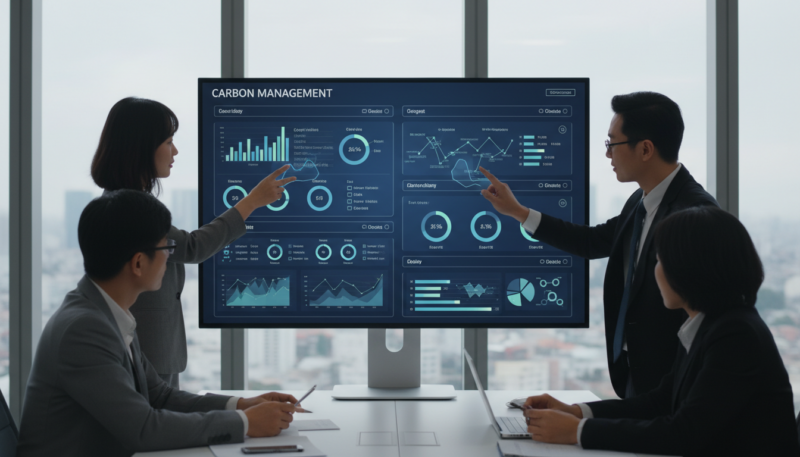
Users can configure views for different departments. This ensures everyone contributes to the overall success.
Regular updates to the dashboard keep the system aligned with evolving strategies. It acts as a dynamic guide for continuous improvement.
Integration with Third-Party Tools
Integration with external systems significantly extends platform functionality. Connecting to energy monitors or supply chain software creates a unified data ecosystem.
This seamless data flow is similar to modern infrastructure monitoring systems. It provides a holistic view of environmental impact.
Companies gain deeper insights across all business activities. This integration is a key option for building a bespoke, effective solution.
It drives more targeted reduction efforts over time.
Optimizing Data and Reporting for Sustainability Goals
Without accurate and current data, even the most well-intentioned sustainability initiatives can drift off course. Optimizing these processes turns information into a reliable guide for reaching environmental targets.
It ensures every decision is based on facts, not estimates. This builds a solid foundation for long-term success.
Automated Data Collection
Manual data entry is slow and prone to mistakes, like booking the wrong flight or hotel. Automation streamlines this critical step.
Software connects directly to energy meters, travel booking systems, and supply chain logs. It gathers information seamlessly, saving valuable time.
This eliminates human error from the reporting process. Teams can trust the data for audits and strategic planning.
Real-Time Performance Metrics
Annual reports offer a backward glance, but real-time metrics provide a live map. Companies see their impact day by day or week by week.
This allows for quick adjustments if activities start to veer off the intended route. It is the difference between correcting course mid-trip and discovering you missed your destination a year later.
Live data creates a powerful feedback loop for continuous improvement.
| Aspect | Legacy Reporting | Optimized Data & Reporting |
|---|---|---|
| Data Entry | Manual, periodic updates | Fully automated, continuous sync |
| Error Rate | High risk of human mistakes | Minimal, system-verified accuracy |
| Insight Timeliness | Months-old, historical view | Real-time, actionable dashboard |
| Strategic Value | Limited, for compliance only | High, drives proactive management |
This optimized approach saves resources and builds credibility. Investors and customers see a company that manages its environmental journey with precision.
The right data strategy illuminates the best way forward.
Overcoming Implementation Challenges
The path to successful carbon management implementation is rarely without its bumps and detours. Companies should expect a few hurdles when launching new software.
A proactive approach identifies these obstacles early. This allows teams to develop solutions before small issues grow.

Common Obstacles and Solutions
Resistance to change is a frequent human challenge. Employees may be hesitant to adopt new processes.
Clear communication about the benefits helps overcome this. Involve staff in the process to build buy-in from the start.
Data quality is another common concern. Establishing clear protocols for entry ensures accuracy.
Training everyone on their role supports a smooth data flow. Leadership support is crucial for securing resources.
Demonstrating the return on investment aligns goals with business objectives. Technical integration needs careful management.
Working closely with IT teams and the software provider prevents delays. This collaboration ensures systems connect properly.
| Obstacle | Typical Impact | Recommended Solution |
|---|---|---|
| Resistance to Change | Slow adoption, low user engagement | Involve employees early; communicate benefits clearly |
| Poor Data Quality | Inaccurate reporting, flawed insights | Establish strict entry protocols; provide role-specific training |
| Lack of Executive Support | Insufficient budget, low priority | Show ROI; link sustainability to core business goals |
| System Integration Issues | Data silos, manual workarounds | Collaborate with IT and vendor for a seamless setup |
Having a clear plan for these challenges makes the transition easier. Persistence and patience are key.
Building a sustainable culture requires time and effort over the course of a year. The long-term benefits for the company and the planet make it worthwhile.
Teams that anticipate problems find the best way forward. They can reach their final destination with confidence.
Future Trends in Carbon Management Technology
The future of carbon management lies in harnessing artificial intelligence and machine learning to unlock deeper insights and drive more effective action. These advancements will transform how organizations approach their sustainability journey over the coming months and years.
Staying informed about these trends is crucial for any forward-thinking company. The technology landscape is shifting towards greater intelligence and integration.
Innovations in Data Analytics
AI and machine learning are driving major innovations in carbon data analytics. They process vast datasets to predict emission patterns with unprecedented accuracy.
This allows companies to identify even the smallest sources of waste in real-time. It provides a clear guide for targeted reduction activities every day.
Predictive capabilities help teams act weeks or months in advance. This proactive approach is far more effective than retrospective analysis.
Emerging Industry Standards
Global trends are moving towards digital verification and transparency. Systems like the ETIAS authorization for travel reflect this shift.
Similar digital standards are emerging for environmental reporting across sectors. This push encourages seamless integration between all business software platforms.
It creates a connected, sustainable enterprise ecosystem. Data flows as smoothly as modern transportation between key destinations.
| Aspect | Current Technology | Future Trend |
|---|---|---|
| Data Analysis | Periodic reports, manual insights | AI-driven, real-time predictive analytics |
| System Integration | Often siloed, limited connectivity | Fully integrated enterprise ecosystem |
| Compliance Approach | Reactive to existing standards | Proactive adaptation to emerging digital standards |
| Strategic Value | Mainly for reporting | Drives operational agility and market leadership |
Investing in these advanced technologies prepares companies for future regulations. It ensures they maintain a competitive edge in a world that increasingly values sustainability.
Organizations that adopt these tools early will lead their industries. They turn future challenges into opportunities for growth and innovation.
Conclusion
The final destination of any corporate sustainability effort is a measurable reduction in environmental impact and enhanced business resilience. Adopting dedicated software is a strategic move to improve performance over time.
Following the steps in this guide provides a clear way to implement a successful strategy. It delivers long-term value within a year.
The benefits include lower operational costs and a stronger reputation. These outcomes are vital for modern success.
As technology evolves, staying informed ensures a company leads in the global sustainability movement. We encourage every business to take the first step today.
Leverage data to create a more sustainable and profitable future. This is the best plan for a better world.
FAQ
What is the primary function of the Plan A 2026 software?
This platform helps businesses measure, monitor, and reduce their environmental impact. It automates data collection and provides clear analytics to guide sustainability efforts.
How can this tool help reduce operational expenses?
By identifying inefficiencies in energy and resource use, companies can cut waste. This leads to direct savings on utility bills and material costs over time.
Is the software difficult to integrate with our current systems?
No, it is designed for seamless connection with common enterprise and accounting software. The setup process is streamlined for minimal disruption to daily workflow.
What kind of reporting capabilities does the dashboard offer?
The dashboard provides tailored reports for different stakeholders. Teams can generate real-time performance metrics and compliance documents with just a few clicks.
Can small businesses benefit from this carbon management solution?
Absolutely. The platform scales to fit organizations of various sizes. It helps smaller companies build a strong reputation and prepare for future regulations efficiently.
How does the software assist with setting practical sustainability goals?
It uses your initial carbon footprint assessment to recommend achievable, science-based targets. The system then helps track progress toward these destinations.
What support is available during the initial implementation phase?
Comprehensive guidance is provided, from data migration to team training. Experts help overcome common obstacles to ensure a smooth and successful launch.
Are the data analytics features updated with new industry standards?
Yes, the platform continuously incorporates emerging standards and innovations. This ensures your company’s strategies remain effective and forward-looking.